What is MACT Law???
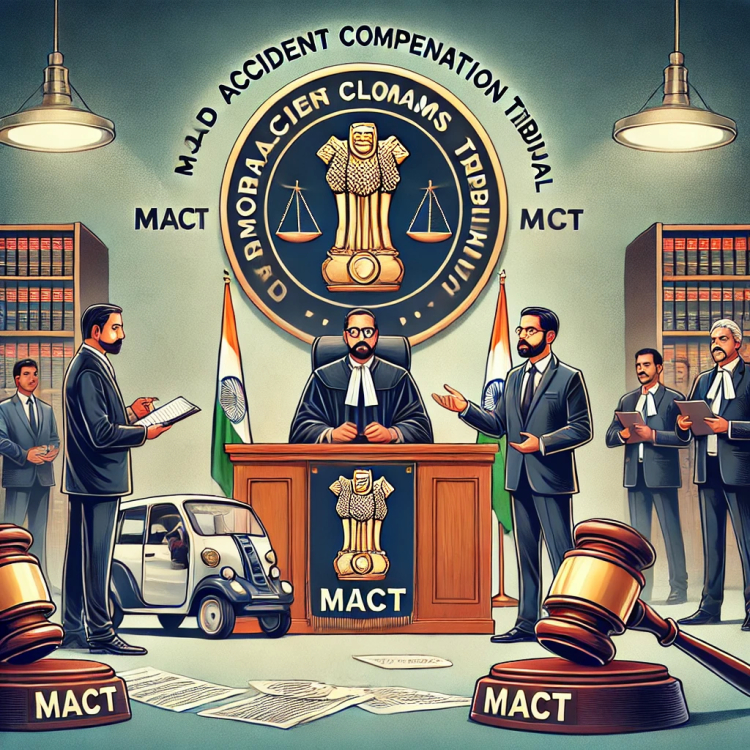
The Motor Accidents Claims Tribunal (MACT), established under the Motor Vehicles Act, 1988, handles compensation claims for road accident victims. It ensures speedy justice by determining liability and awarding fair compensation for injuries, death, or property damage, reducing civil court burden and providing financial relief to victims and their families.
Need an Advocate in Delhi?
Get connected for legal assistance regarding your matter.
Speak with an Advocate • Multiple Languages Supported
What is MACT Law?
Motor Accidents Claims Tribunal (MACT) Law in India
Under the Motor Vehicles Act, the MACT was established for the specific courts dealing with road accident case claims since 1988. It works as a mechanism for compensating victims or legal representatives of victims injured, killed, and losing properties due to road accidents. MACT aims at speedy justice and fair compensation for the victims by a quick and effective process without requiring them to approach civil courts.
Objectives of the MACT
Make an early payment to road accident victims by determining liability and giving proper compensation. Also, it serves to lessen civil court burden and avail the financial assistance to victims for medical expenditure, loss of income, or other damages due to accidents.
Jurisdiction of MACT
MACT has jurisdiction for cases concerning:
-
Personal injury or death due to a motor vehicle accident.
-
Damage to property based on the ground of road accident.
-
Claim for compensation under third-party insurances.
-
Hit-and-run cases wherein the owner of the vehicle is unidentified.
The following are the possible locations where the claim petition can be instituted:
-
Near to the area of the accident
-
Where the claimant resides
-
Where the defendant (owner of the vehicle/insurer) resides
Who Can File a Claim?
-
The injured person in case of an accident.
-
Legal representatives in case of death.
-
Owner of the property damaged due to the accident.
-
Any person with a legal right to claim compensation.
Liability and Awarding Compensation Under MACT
MACT determines liability based on principles of negligence or no-fault liability. Under no-fault liability, user compensation can be claimed as allowed under the following provisions:
Compensation under No-Fault Liability (Section 140 of the Motor Vehicles Act, 1988)
This is the amount of compensation to be given without proving fault:
-
Rs. 50,000 for injury.
-
Rs. 2,00,000 for death.
Liability Based on Fault (Section 166)
The claimant has to prove the negligence of the driver or owner. The compensation is determined by damage, medical expenses, and loss of income.
Hit-and-Run Cases (Section 161)
The compensation to be paid by the government:
-
Rs. 25,000 for injury.
-
Rs. 2,00,000 for death.
Procedure to File a Claim
Filing a Petition
The claimant files a petition comprising details of the accident, nature of the injuries, medical reports, and other relevant documents.
Notice to Opposing Parties
The Tribunal notifies the owners of the vehicle, drivers, and insurance companies.
Hearing and Evidence
Producing evidence by both parties, including witness statements and reports of the accident.
Final Order
The Tribunal decides based on the evidence and awards compensation.
Conclusion
MACT provides fast-track disposal for road accident claims along with a fair award for victims so that victims and their families may not suffer financially owing to long civil litigation. This makes it an avenue for stronger protection of rights for the accident victims and their families against financial insecurities.