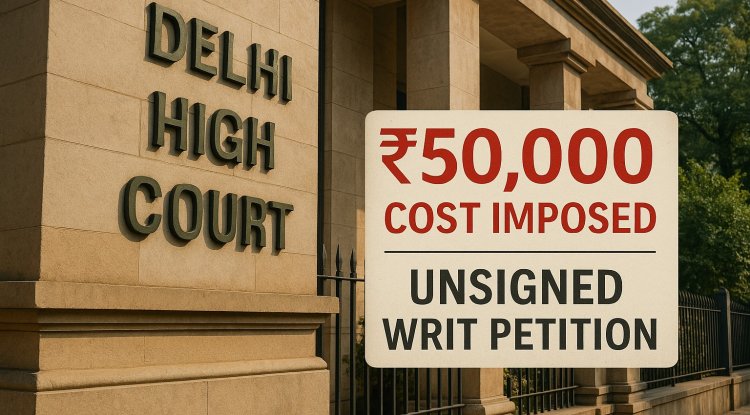
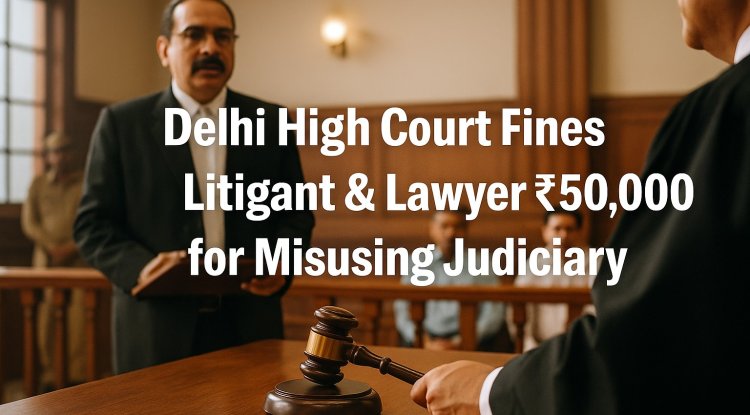
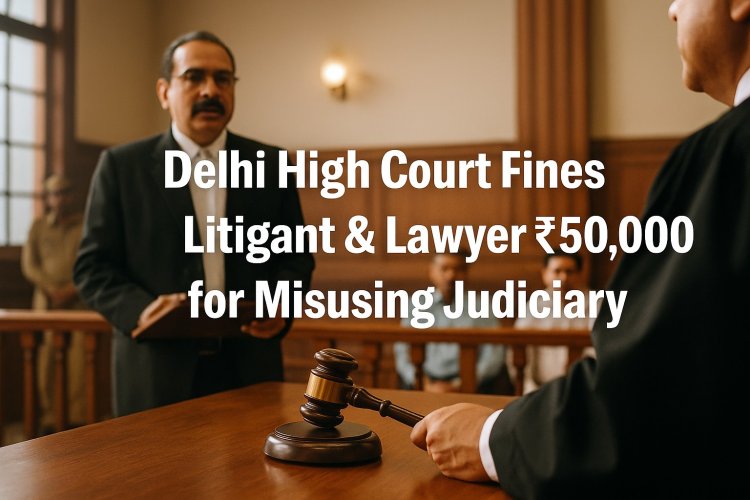
Delhi High Court Fines Litigant & Lawyer ₹50,000 for Misusing Judiciary
Delhi HC fines litigant and lawyer ₹50,000 for filing frivolous petition without direct interest. Learn why misuse of judicial process is penalized.
Need an Advocate in Delhi?
Get connected for legal assistance regarding your matter.
Speak with an Advocate • Multiple Languages Supported
In early June 2025, the Delhi High Court, presided over by Justice Mini Pushkarna, imposed ₹50,000 costs on both a petitioner and their lawyer. The ruling followed a finding that the writ filed under Article 226 of the Constitution was frivolous and amounted to misuse of judicial authority
Summary of the Incident
The court struck down a petition challenging alleged illegal construction near a Mehrauli gurdwara. Notably, the petitioner lived approximately 10 km away and had no direct interest or personal grievance, casting doubt on the petition’s legitimacy
Petition Background
The petitioner claimed that unauthorised construction near the gurdwara affected him. However, the only link was that the structure fell on his daily commute route. There were no harmed rights, no financial loss, and no public interest element justifying a petition under constitutional writ jurisdiction .
Court’s Observations
No Legal or Fundamental Right Affected
Justice Pushkarna emphasised that the petitioner’s legal entitlement remained untouched. With no cause of action or violation of rights, the court dismissed the writ as entirely inappropriate
Only Shared Commute Route
Identifying the sole basis as “common street usage,” the bench found the petition was motivated by convenience rather than a genuine legal grievance .
Legal Basis of Penalty
Article 226 and Its Limits
Article 226 empowers courts to address writs for enforcement of rights. This power, however, presupposes a real stake in the matter—not casual or aesthetic objections like shared-road concerns.
Scope for Costs under High Court Rules
Recognising the petition as a misuse, the court invoked its power to award litigation costs. The ₹50,000 is directed to the Advocates Welfare Trust, with a four‑week deadline to pay
Impact on Petitioner & Lawyer
This penalty affects both the petitioner and their counsel, signaling that litigants and their legal advisors must ensure petitions have bona fide grounds. Legal misadventures can lead to avoidable expenses and reputational damage for both parties.
Wider Implications
Judicial Economy
Frivolous petitions burden courts and delay justice for genuine litigants. By penalising misuse, the court reinforces its commitment to conserving judicial resources and maintaining caseload integrity.
Deterrence Effect
Imposing a monetary fine serves as deterrence. Future petitioners and lawyers are likely to conduct a more careful assessment before resorting to constitutional writs.
Comparative Precedents
Several High Courts and the Supreme Court have penalised misuse of legal processes:
-
Rajasthan HC fined a lawyer ₹50,000 for misleading court via false urgency claims
-
Punjab & Haryana HC imposed ₹5 lakh costs for repeated suppressed facts
-
Delhi HC itself fined ₹1 lakh on an advocate demanding multiple rehearings, calling it “worst abuse”
These actions reflect a broader judicial shift toward enforcing discipline and clarity in legal filings.
Best Practices for Filing Petitions
-
Verify Standing: Only petitions from individuals affected in law or facts should be entertained.
-
Check Jurisdiction: Ensure the constitutional remedy is appropriate and not a substitute for administrative or civil court.
-
Evaluate Evidence: Maintain factual accuracy—incorrect claims weaken credibility and invite penalties.
-
Assess Costs Risk: Frivolous claims may backfire financially and reputationally.
Conclusions
This ruling by Justice Pushkarna is a reminder that Constitutional writs are serious instruments. Courts expect petitions based on genuine grievance and legal interest, not convenience. The ₹50,000 fine is a measured yet firm rebuke to discourage misuse and uphold judicial efficiency.
FAQs
Q1: Can High Courts impose costs for frivolous petitions?
Yes. Under procedural rules, courts may levy costs on both petitioners and lawyers for misuse of judicial process.
Q2: How much do courts typically fine in such cases?
Penalties vary—from ₹10,000 to ₹5 lakh—depending on context, intent, and impact on the court.
Q3: Does the lawyer always share liability?
Yes, if the lawyer knowingly supports or files a baseless petition, they too may be penalised.
Q4: Can the fine be challenged?
A review petition may be filed, but courts generally require payment before considering the challenge.
Q5: How to avoid being penalised?
Ensure petitions are rooted in personal legal interest, supported by evidence and sound jurisdiction. Seek professional advice when in doubt.