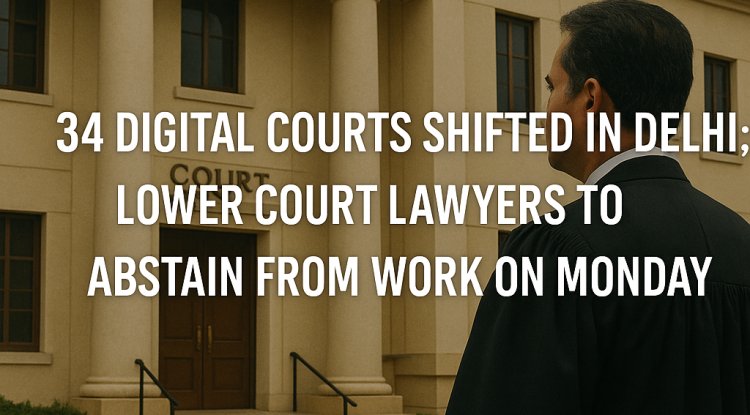
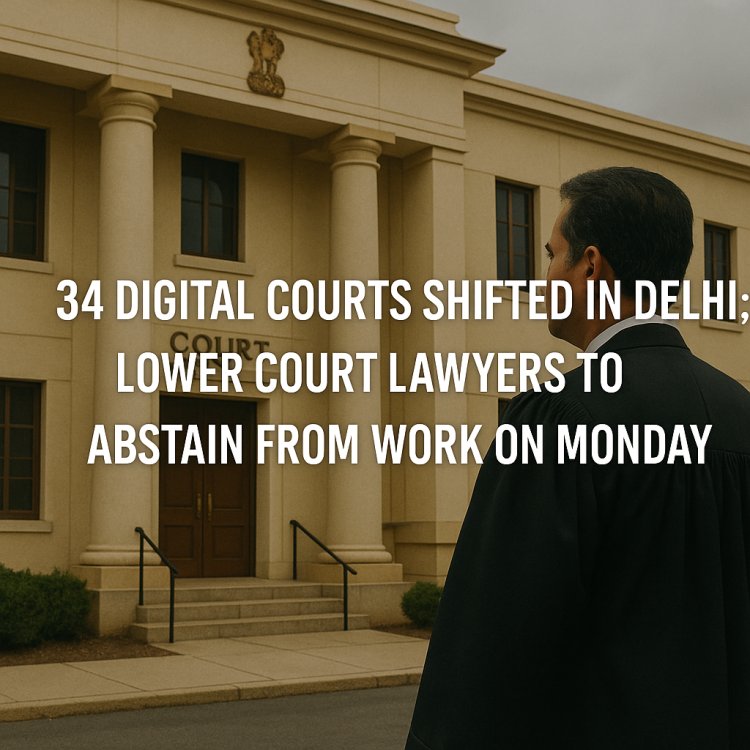
34 Digital Courts Shifted in Delhi: Lower Court Lawyers to Abstain from Work on Monday
Lawyers in Delhi’s lower courts plan to abstain from work on Monday in protest over the transfer of 34 digital NI Act courts to Rouse Avenue, citing concerns about access and protocol.
Need an Advocate in Delhi?
Get connected for legal assistance regarding your matter.
Speak with an Advocate • Multiple Languages Supported
In a stall that underscores growing frustrations, lawyers in Delhi's lower courts plan to abstain from work on Monday to protest the transfer of 34 digital courts handling cheque-bounce cases to the Rouse Avenue complex. Their concerns raise questions about access, protocol, and the future of digital justice.
1. Background: What Are the “34 Digital Courts”?
-
Set up on May 30, 2025, by Chief Justice Devendra Kumar Upadhyaya, these courts hear cases under the Negotiable Instruments (NI) Act
-
Judges operate from Rouse Avenue, while support staff (readers, ahlmas, stenographers) remain stationed in district courts Delhi holds over 450,000 pending cheque-bounce cases, making these courts a relief valve to expedite hearings
2. The Shift That Fanned the Flames
-
The move relocated judges digitally, but stakeholders—lawyers, parties, police—are concerned they'd still need to appear in person.
-
This created fears of logistical challenges and potential disruptions in court schedules.
3. What’s Driving the Lawyers’ Protest?
-
Lawyers fear that physical presence may be required, defeating the purpose of a digital court.
-
The All District Courts Bar Association of Delhi initially called for a boycott from Monday
-
The protest highlights deeper tensions: convenience, transparency, and court accessibility.
4. Reassurances from the High Court
-
After talks with the Chief Justice of the Delhi High Court, lawyers were assured that these digital courts would remain fully digital.
-
No physical appearance will be mandated for any stakeholders—lawyers, parties, or police officers
5. Impact of Digital Court Infrastructure
-
The pilot faced early hiccups, including connectivity issues—flagged in a PIL by Advocate Jagriti Jain
-
However, the Court reported these technical gaps were addressed by May 9, 2025, and the PIL was resolved .
-
Since then, efficiency has improved: more courts, better scheduling, and reduced wait times .
6. How Big Is the NI-Act Caseload?
-
Delhi averages 15.1 lakh total cases, with approximately 31% being cheque-bounce matters
-
A typical NI court conducts around 80 hearings per day, highlighting immense pressure
7. Broader Significance for Digital Courts
-
These digital courts are part of a broader effort to modernize justice, reduce pendency, and make court access smoother.
-
If successful, this could pave the way for replicating the model for criminal, civil, or family courts.
8. What This Means Moving Forward
-
Monitoring Compliance: Will courts truly stay fully digital without requiring in-person attendance?
-
Tech Upgrades: Continuing investment in connectivity, scheduling platforms, and training.
-
Expansion Plans: Potential roll-out to other districts or case types—if this model proves effective.
Conclusion
The withdrawal of lawyers from lower court work on Monday is a symbolic act—a call for clarity and commitment to a truly digital court system. Delhi's experiment with shifting 34 NI Act courts to a digital platform is ambitious, but its success hinges on technology, trust, and careful implementation. Ultimately, it could mark a milestone in shaping a faster, fairer judicial system.
FAQs
1. Why are lower court lawyers abstaining from work on Monday?
They’re protesting the shift of 34 digital NI‑Act courts to Rouse Avenue, worried that in-person appearances may still be required.
2. What guaranteed assurances did the High Court provide?
They assured lawyers that the courts will remain fully digital—no physical presence required for any stakeholders.
3. How many cheque bounce cases are pending in Delhi?
About 450,000 NI‑Act cases, forming around 31% of Delhi’s 1.51 million pending court cases.
4. What earlier challenges did the digital setup face?
Connectivity issues and admin glitches noted in a PIL by Advocate Jagriti Jain—but fixes were implemented by May 9, 2025
5. Could Delhi’s digital courts be a model for the future?
Yes—if efficiency and access improve as promised, this could inspire broader digitization across other courts and jurisdictions.