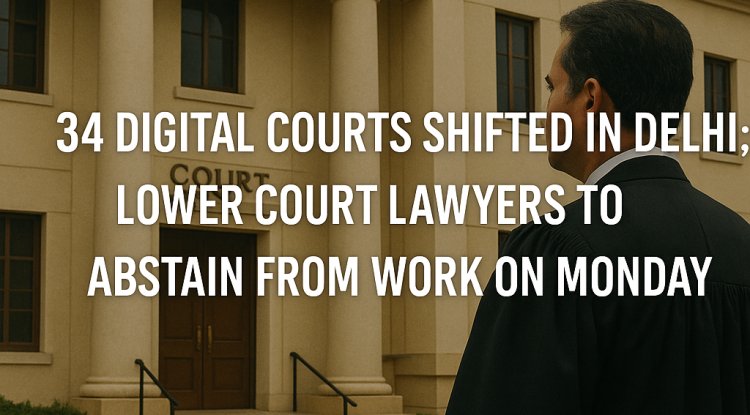
The Role of Criminal Law in Maintaining Justice in India
Find expert criminal advocates in Delhi for legal defense. Learn about criminal law, case types, essential documents, and legal rights. Call +918100007400 now!

Need an Advocate in Delhi?
Get connected for legal assistance regarding your matter.
Speak with an Advocate • Multiple Languages Supported
Contemporary Law by Criminalization in India
Criminal law is part and parcel of the Indian legal justice system, and it is the most important pillar in ensuring justice, rights, and order in society. It defines crimes, prescribes punishments, and maintains the rule of law. From the perspective of both the victim and the accused, access to a seasoned criminal advocate in Delhi can significantly impact the legal process and its outcome.
Role of Criminal Law in India
At its core, criminal law upholds justice and fairness within the legal structure. Here are key aspects of its importance:
1. Protection of Society
Criminal law deters individuals from committing unlawful acts by imposing strict penalties.
2. Fair Trials
It ensures that individuals accused of crimes receive a fair hearing in court.
3. Punishment for Offenses
Criminal law guarantees that offenders receive appropriate punishments based on the severity of their crimes.
4. Safeguarding Individual Rights
It upholds fundamental rights such as the right to life, dignity, and liberty.
5. Rehabilitation of Offenders
The legal system also aims to reintegrate offenders into society.
6. Crime Prevention
By enforcing laws and imposing punishments, criminal law helps in deterring potential crimes.
7. Maintaining Public Order
Criminal law prevents anarchy by holding lawbreakers accountable for their actions.
Types of Cases in Criminal Law
Criminal offenses are classified based on their nature and severity:
1. Bailable and Non-Bailable Offenses
-
Bailable offenses (e.g., defamation, simple assault) allow the accused to obtain bail easily.
-
Non-bailable offenses (e.g., murder, rape, kidnapping) require court discretion for bail approval.
2. Cognizable and Non-Cognizable Offenses
-
Cognizable offenses (e.g., robbery, murder) allow police to arrest without prior court approval.
-
Non-cognizable offenses (e.g., public nuisance, forgery) require court permission for investigation.
3. White-Collar Crimes
-
Fraud, cybercrime, money laundering, corporate offenses.
4. Crimes Against Women
-
Domestic violence, dowry harassment, sexual assault, workplace harassment.
5. Cyber Crimes
-
Identity theft, online fraud, hacking, cyberstalking.
6. Property Crimes
-
Theft, burglary, arson, vandalism.
7. Organized Crimes
-
Human trafficking, drug smuggling, illegal arms trade.
Essential and Mandatory Documents for a Criminal Case
Key documents required for filing or defending a criminal case include:
-
FIR (First Information Report)
-
Police Complaint Copy
-
Charge Sheet (Filed by the Police)
-
Witness Statements
-
Medical Reports (if applicable)
-
Bail Application
-
Proof of Identity (Aadhar Card, Passport, etc.)
-
Legal Notices (if any)
-
Forensic Reports (if applicable)
-
Audio/Video Evidence (if available)
An experienced advocate in Delhi ensures all documents are correctly submitted and presented in court.
Certifications and Qualifications of a Criminal Advocate in Delhi
When selecting a criminal lawyer, ensure they possess:
-
Degree in Law (LLB) from a recognized university
-
Registration with the Bar Council of India (BCI)
-
Experience in handling criminal cases
-
Expertise in IPC, CrPC, and the Evidence Act
-
Strong track record of representing clients in the Supreme Court and High Court
Case Studies: Successful Criminal Defense Cases
Case Study 1: Wrongful Accusation
A client was falsely accused of financial fraud. Our criminal advocate in Delhi gathered strong evidence, presented witness testimonies, and successfully got the case dismissed.
Case Study 2: Bail in a Serious Crime
An individual charged with a serious offense was repeatedly denied bail. With a strong legal argument, our lawyer secured bail and later proved their innocence.
What Does Indian Law Say About Criminal Justice?
1. Indian Penal Code (IPC), 1860
Defines various criminal offenses and their respective punishments.
2. Code of Criminal Procedure (CrPC), 1973
Outlines procedures for filing, investigating, and trying criminal cases.
3. Evidence Act, 1872
Regulates the admissibility of evidence in criminal proceedings.
4. Right to Legal Representation
Article 22 of the Constitution guarantees every accused the right to a legal advocate.
5. Right to Bail
Under CrPC, certain offenses allow an accused to seek bail.
Frequently Asked Questions (FAQs)
1. When should I hire a criminal advocate in Delhi?
You should hire a lawyer immediately after being accused or arrested to ensure proper legal defense.
2. How much does a criminal lawyer charge?
Fees vary based on case complexity, advocate’s experience, and court level (District, High, or Supreme Court).
3. Can I get bail in a serious criminal case?
Yes, but it depends on case specifics. An experienced lawyer can file a bail petition and argue for your release.
4. How long do criminal cases take in India?
Case duration varies from months to years based on complexity and court workload.
5. Can I change my lawyer during a case?
Yes, you have the legal right to change your lawyer at any stage of the trial