Legal Rights Every Delhi Citizen Should Know
Discover the essential legal rights every Delhi citizen should know—from the right to equality and education to filing an FIR, police encounters, and tenant protections. Stay informed and empowered with this practical guide to your constitutional and legal entitlements in the capital city.
Need an Advocate in Delhi?
Get connected for legal assistance regarding your matter.
Speak with an Advocate • Multiple Languages Supported
Living in the bustling metropolis of Delhi comes with a range of opportunities—and challenges. Whether you're a student, working professional, homeowner, tenant, or simply a traveler passing through, understanding your legal rights is essential. These rights empower you to stand up against injustice, navigate daily situations confidently, and seek protection under the law when needed.
Here’s a breakdown of the most important legal rights every citizen of Delhi should be aware of:
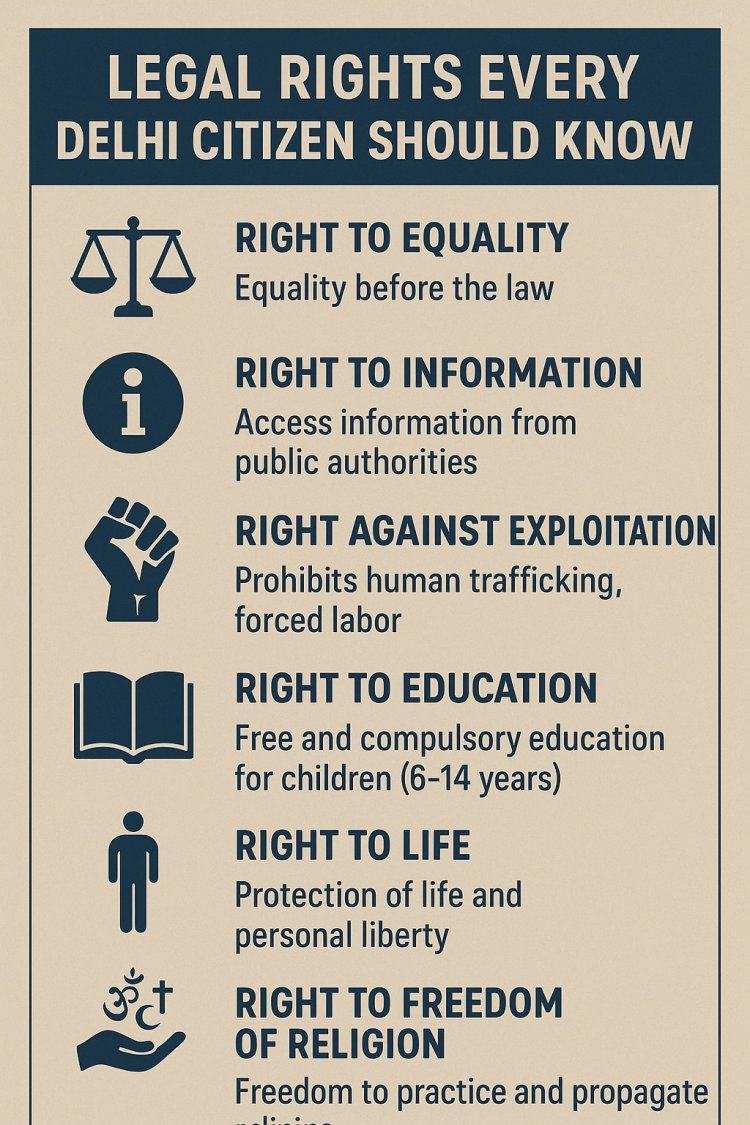
1. Right to Equality (Article 14–18)
All citizens of India, including those residing in Delhi, have the right to be treated equally before the law. Discrimination on the basis of religion, caste, gender, or place of birth is prohibited. This includes equal access to public spaces, services, and employment opportunities.
Example:
If you're denied entry to a restaurant or club because of your caste or religion, it is a violation of your constitutional right.
2. Right to Information (RTI Act, 2005)
Delhi citizens can file an RTI application to request information from any public authority—be it municipal corporations, Delhi Police, or the Delhi Development Authority (DDA). This promotes transparency and accountability in governance.
Practical Use:
Want to know how government funds are being used in your locality? File an RTI with the concerned department and get access to the records.
3. Consumer Rights
Every resident of Delhi is protected under the Consumer Protection Act, 2019, which allows them to file complaints against unfair trade practices, faulty goods, or deficient services.
Where to Complain:
You can approach the Delhi State Consumer Disputes Redressal Commission or local district forums for resolution.
4. Right to Education (Article 21A)
Children between the ages of 6 and 14 have the right to free and compulsory education. This applies to both public and private institutions, as regulated by the Right to Education (RTE) Act.
Delhi Specific:
The Delhi government actively enforces the RTE by ensuring admission quotas for economically weaker sections (EWS) in private schools.
5. Right to a Clean Environment
Under Article 21 of the Constitution, the right to life also includes the right to a healthy and pollution-free environment. In Delhi, which often struggles with air pollution, citizens can file complaints against activities contributing to environmental degradation.
Authorities Involved:
You can raise grievances with the Delhi Pollution Control Committee (DPCC) or the National Green Tribunal (NGT).
6. Rights During Police Encounters or Arrests
Delhi residents must be aware of their rights if stopped, detained, or arrested by the police:
-
You cannot be arrested without being informed of the charges.
-
You have the right to remain silent.
-
You are entitled to legal counsel.
-
You must be produced before a magistrate within 24 hours.
Bonus Tip:
Always ask for identification if approached by a plain-clothed officer and note down their badge number.
7. Right to Lodge an FIR
Under Section 154 of the Criminal Procedure Code (CrPC), any person can file an FIR at the police station. In Delhi, if the local police station refuses, you can:
-
Approach the Deputy Commissioner of Police (DCP).
-
File an online FIR through the Delhi Police e-portal.
8. Tenant and Landlord Rights
With Delhi being a hub for migrants, knowing tenancy laws is crucial. The Delhi Rent Control Act governs agreements, eviction processes, and rent ceilings.
Key Points:
-
Landlords must provide a 30-day notice before eviction.
-
Tenants are protected from arbitrary rent hikes.
-
Verbal agreements are risky—always have a written, registered contract.
9. Women’s Safety and Rights
Delhi women have access to specific legal protections:
-
Section 498A IPC protects against domestic violence and cruelty.
-
The Sexual Harassment of Women at Workplace Act (2013) applies to all employers.
-
Women can file complaints at any police station or through women’s helpline numbers like 1091.
Additional Support:
The Delhi Commission for Women (DCW) offers legal aid and counseling for distressed women.
10. Right to Privacy
Upheld by the Supreme Court in 2017 as a fundamental right, Delhi citizens can expect their personal data, communications, and homes to be protected from unauthorized intrusion—be it by individuals or the state.
Digital Privacy Tip:
Delhi residents should be cautious about sharing Aadhaar or PAN data and demand transparency in how their data is used, especially in government or financial dealings.