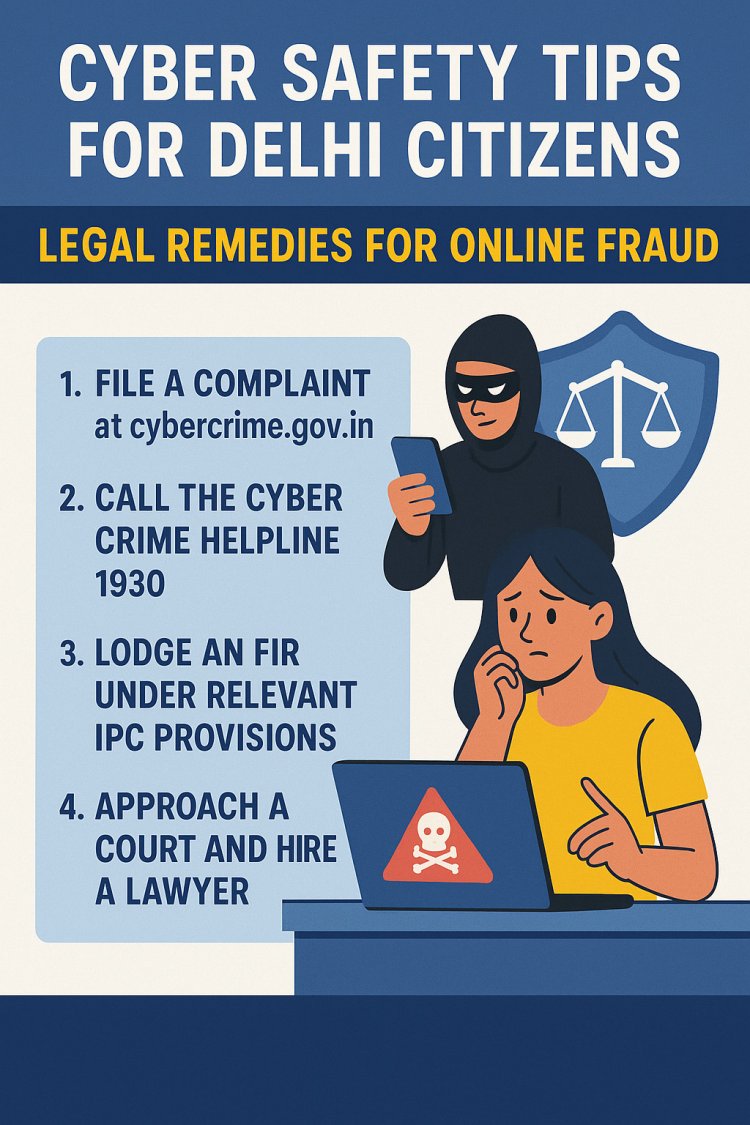
Cyber Safety Tips for Delhi Citizens: Legal Remedies for Online Fraud
Stay safe online with essential cyber safety tips for Delhi citizens. Learn how to prevent online fraud and explore legal remedies available under Indian law in case of cyber crime.
Need an Advocate in Delhi?
Get connected for legal assistance regarding your matter.
Speak with an Advocate • Multiple Languages Supported
In the digital age, the internet has brought convenience and connectivity, but it also exposes users to growing cyber threats. From phishing scams and identity theft to UPI fraud and social media impersonation, Delhi citizens face increasing risks online. As technology becomes more embedded in our daily lives, so does the importance of cyber safety and awareness of the legal remedies available in India.
This blog offers essential cyber safety tips for residents of Delhi and outlines the legal steps one can take in the unfortunate event of online fraud.
Common Types of Online Fraud in Delhi
Delhi, being a bustling metro with high digital penetration, has witnessed a surge in cybercrime cases. According to the National Crime Records Bureau (NCRB), Delhi consistently ranks among the top cities for cybercrime reports. Some common types of online fraud include:
-
Phishing attacks: Fraudulent emails or messages that trick users into revealing sensitive information.
-
UPI/Banking frauds: Scammers lure people into sharing OTPs or clicking fake payment links.
-
Job and loan scams: Fake job offers or loan approvals in exchange for registration fees.
-
Social media scams: Impersonation of profiles or fraudulent marketplace listings.
-
E-commerce frauds: Payments made for goods or services that are never delivered.
Cyber Safety Tips for Delhi Residents
Staying vigilant is the first line of defense. Here are some practical cyber safety tips:
1. Enable Two-Factor Authentication (2FA)
Add an extra layer of security to your online accounts—especially banking, email, and social media—by enabling 2FA.
2. Verify Before You Click
Always check URLs, sender addresses, and domain names. Avoid clicking on suspicious links sent via email, SMS, or WhatsApp.
3. Beware of Urgency Tactics
Scammers often create a sense of urgency ("Your account will be blocked!") to make you act quickly without thinking. Always pause and verify.
4. Limit Personal Information Sharing
Be cautious about what you share online, especially on social media. Avoid posting details like address, contact numbers, or travel plans.
5. Use Strong, Unique Passwords
Avoid using the same password across multiple platforms. Use a combination of letters, numbers, and symbols, and consider using a password manager.
6. Keep Software Updated
Ensure your phone, computer, and apps are up to date with the latest security patches.
7. Check for HTTPS
Before making online transactions, ensure the website uses secure encryption. Look for the padlock symbol and "https://" in the address bar.
What to Do If You Are a Victim of Online Fraud in Delhi
If you fall victim to an online scam, quick action is crucial. Here’s what you should do:
1. Report Immediately
Dial 1930, India’s cybercrime helpline, to report financial frauds. It connects you to the cybercrime cell for immediate blocking of the transaction.
2. File a Complaint on the Cyber Crime Portal
Visit the National Cyber Crime Reporting Portal at www.cybercrime.gov.in. You can file a complaint anonymously or with your details.
3. Approach Your Nearest Police Station
You can lodge a First Information Report (FIR) at your local police station. Cyber crimes are cognizable offenses under Indian law, and the police are obligated to register an FIR.
Legal Remedies Under Indian Law
Several Indian laws offer protection and remedies to cybercrime victims:
a. Information Technology (IT) Act, 2000
The IT Act is India’s primary legislation dealing with cybercrime. It includes provisions for:
-
Section 66C – Identity theft: Punishable with imprisonment up to 3 years.
-
Section 66D – Cheating by impersonation using computer resources.
-
Section 43A – Compensation for failure to protect user data.
b. Indian Penal Code (IPC)
Traditional laws under the IPC are also applied to cyber offenses:
-
Section 420 – Cheating and dishonestly inducing delivery of property.
-
Section 468 – Forgery for the purpose of cheating.
-
Section 499 – Cyber defamation.
c. RBI Guidelines
The Reserve Bank of India provides protection to customers in cases of unauthorized electronic banking transactions. Victims must report such frauds within 3 working days to avoid liability.
d. Consumer Protection Act, 2019
The act includes provisions for redressal in cases of unfair trade practices and online shopping frauds through e-commerce platforms.
Tips for Filing an Effective Cyber Complaint
To make your complaint more actionable, keep the following ready:
-
Screenshots or call recordings.
-
Details of the fraudulent transaction (time, amount, account number).
-
Email or phone number of the fraudster, if known.
-
Chat logs or correspondence.