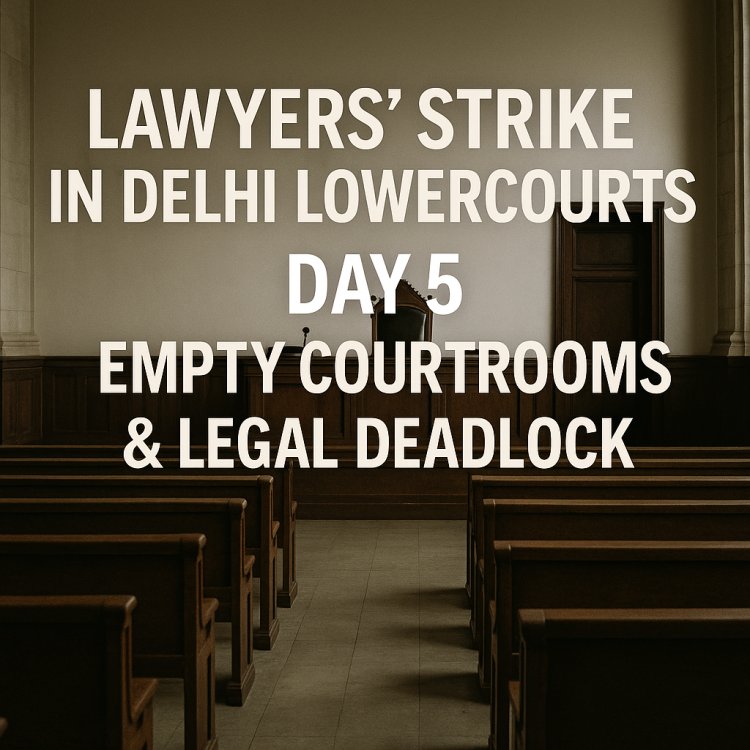
Lawyers' Strike in Delhi Lower Courts Day 5 Empty Courtrooms & Legal Deadlock
Delhi’s lower courts remain paralyzed as the lawyers’ strike enters Day 5. Discover the reasons behind the protest, its impact on the judiciary.
Need an Advocate in Delhi?
Get connected for legal assistance regarding your matter.
Speak with an Advocate • Multiple Languages Supported
Why Are Delhi’s Lawyers on Strike?
The lawyers practicing in Delhi’s lower courts initiated the strike in response to issues they claim have long gone unresolved. The key grievances include:
-
Delay in implementation of welfare measures for lawyers.
-
Lack of basic infrastructure in lower courts including adequate chambers, parking, and sanitation facilities.
-
Alleged high-handedness by police and administrative apathy toward lawyers’ concerns.
-
Demand for a new law to ensure better protection of lawyers during the course of their professional duties.
The strike was called by several bar associations, including the coordination committee of all district court bar associations in Delhi, as a unified show of dissent.
What Is the Impact of the Strike?
1. Judicial Paralysis
The most immediate and visible impact is the disruption of court proceedings. Thousands of cases scheduled for hearing each day in various district courts have been adjourned. This includes both civil and criminal matters.
2. Delays in Justice
For many citizens, especially those who cannot afford repeated visits to the court, the delay is frustrating and financially draining. Cases involving bail hearings, domestic disputes, property matters, and more have all been pushed back indefinitely.
3. Administrative Burden
With no lawyers appearing in courtrooms, judges are left with skeleton cause lists. The backlog of cases is mounting, further burdening an already overstretched judicial system.
Government and Judicial Response
So far, the response from the government and the judiciary has been restrained. While some senior judicial officers have urged for dialogue and the restoration of services, bar associations have remained adamant that no court work will resume until their demands are adequately addressed.
Legal experts fear that the ongoing deadlock could escalate if no immediate resolution is reached. Some are calling for the intervention of the Chief Justice of the Delhi High Court or even the Chief Minister to mediate talks between protesting lawyers and the administration.
The Way Forward
Negotiations between bar leaders and government officials are expected to take place, but no breakthrough has been reported as of Day 5. Many within the legal fraternity believe that sustained strikes are detrimental to the credibility of the justice system and that structured dialogue is the need of the hour.
Citizens and activists have also begun voicing their concerns, urging both sides to find a resolution that doesn’t further hamper access to justice.
FAQs
1.Why are lawyers in Delhi on strike?
Lawyers are protesting against poor infrastructure, lack of welfare measures, and seeking stronger protection laws for legal professionals.
2.How long has the lawyers’ strike lasted in Delhi?
As of now, the strike has entered its fifth day, and there’s no clear indication of when court functions will resume.
3.Which courts are affected by the strike?
All lower courts in Delhi including district courts in Tis Hazari, Saket, Karkardooma, Patiala House, Rohini, and Dwarka are affected.
4.Are all legal cases being delayed due to the strike?
Yes, a large number of cases across civil and criminal matters have been postponed due to non-appearance of lawyers.
5.What are the demands of the striking lawyers?
Demands include better infrastructure, lawyer protection laws, and implementation of long-pending welfare measures.
Conclusion
As Delhi’s legal community remains on strike, the silence in courtrooms echoes louder than ever. While the grievances raised by lawyers may be legitimate, the prolonged disruption in judicial services is raising serious concerns about the accessibility and efficiency of justice in India’s capital. A swift and balanced resolution is essential—not only to address the needs of lawyers but to ensure justice isn’t delayed for the thousands of citizens depending on the system.