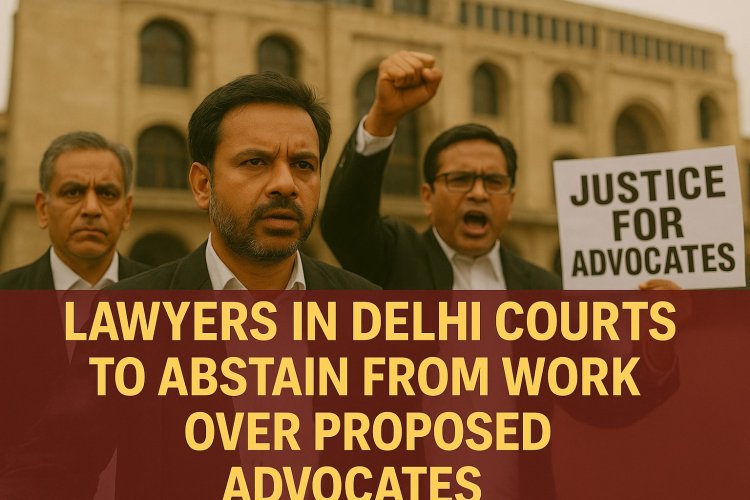
Lawyers in Delhi Courts to Abstain from Work Over Proposed Advocates
Lawyers in Delhi courts abstain from work to oppose the proposed Advocates citing threats to their independence & legal rights. About the protest.
Need an Advocate in Delhi?
Get connected for legal assistance regarding your matter.
Speak with an Advocate • Multiple Languages Supported
Why Are Delhi Lawyers Protesting?
The primary concern of the protesting lawyers revolves around clauses in the proposed amendment that could allegedly curtail the professional freedom and self-governance of advocates. Key issues include:
-
Increased powers to regulatory bodies over disciplinary action, potentially undermining the Bar Councils' authority.
-
Vague definitions of misconduct that lawyers claim could be misused against them.
-
Threat to professional independence, which many fear will lead to undue interference in legal practices.
The Bar Council of Delhi, supported by other legal associations, has called the proposed changes “draconian” and believes they go against the spirit of a free and independent judiciary.
Impact on Legal Proceedings
As lawyers abstain from work in courts including the Delhi High Court and district courts like Tis Hazari, Saket, Karkardooma, and Patiala House, the immediate impact is being felt by litigants. Thousands of cases are being adjourned due to the absence of legal representation.
Judges have acknowledged the protest but continue to hear matters where parties appear in person or where urgent hearings are required. However, this work boycott has led to significant delays in routine proceedings.
Response from Bar Councils and Government
The Bar Council of India (BCI) has expressed solidarity with the protesting lawyers and has urged the central government to reconsider or withdraw the controversial provisions. Several senior advocates have publicly voiced their support for the strike, arguing that any legislative changes to the legal profession must be done in consultation with the legal community.
The Law Ministry, on the other hand, has stated that the bill is still in its draft stage and open for feedback. Officials assure that discussions will be held with all stakeholders before finalizing the amendment.
Public Reaction and Media Coverage
While the legal fraternity has shown unity in its opposition, public opinion is divided. Some citizens express frustration over delayed hearings, especially in long-pending civil and criminal matters. Others empathize with the lawyers’ concerns, recognizing the broader implications for the justice system if professional autonomy is compromised.
National and regional media have covered the protest extensively, highlighting both the legal and political ramifications of the proposed bill.
The Bigger Picture
This protest in Delhi is not isolated. Similar sentiments have been echoed by bar associations in other states like Maharashtra, Tamil Nadu, and Uttar Pradesh, indicating a nationwide resistance to the proposed Advocates (Amendment) Bill.
This issue is emblematic of the ongoing struggle between regulatory oversight and professional independence. Legal professionals argue that while reform is necessary, it must not be imposed unilaterally or without democratic dialogue.
What Happens Next?
-
The strike may intensify if the government doesn’t respond with satisfactory amendments or retraction.
-
Consultative meetings between Bar Councils and the Law Ministry are expected in the coming weeks.
-
If unresolved, the issue could reach the Supreme Court, either through public interest litigation or suo motu notice.
FAQ: Lawyers' Protest Over Advocates (Amendment) Bill
Q1: What is the Advocates (Amendment) Bill 2025?
The Advocates (Amendment) Bill 2025 is a proposed law aimed at amending the Advocates Act, 1961. It includes provisions to redefine misconduct, modify disciplinary mechanisms, and strengthen oversight on lawyers’ conduct.
Q2: Why are lawyers in Delhi protesting?
Lawyers argue that the bill threatens their professional independence, introduces vague misconduct definitions, and gives excessive control to external regulatory bodies.
Q3: Are courts completely shut due to the protest?
No, courts are functioning, but many cases are being adjourned due to lawyers not appearing. Urgent matters and self-represented cases are still being heard.
Q4: Is this protest limited to Delhi?
No. Similar protests and discussions are happening across India as various Bar Associations show solidarity against the bill.
Q5: What does the government say?
The Law Ministry has stated that the bill is in the draft stage and open to feedback. Discussions with stakeholders are expected.
Conclusion
The ongoing protest by lawyers in Delhi courts highlights a fundamental concern: any changes to the legal profession must preserve the independence, dignity, and fairness of the system. While the Advocates (Amendment) Bill aims to bring reform, it must be done in close coordination with the legal community to avoid unintended consequences that could weaken the very fabric of justice in India.