Divorce lawyer in Raja Garden
Looking for the best divorce lawyers in Raja Garden? Get expert legal guidance on mutual & contested divorce, alimony, child custody, and more. Call +918100007400 today!

Need an Advocate in Delhi?
Get connected for legal assistance regarding your matter.
Speak with an Advocate • Multiple Languages Supported
Best Divorce Lawyers in Raja Garden - Advocate in Delhi
What is The Divorce Law in India?
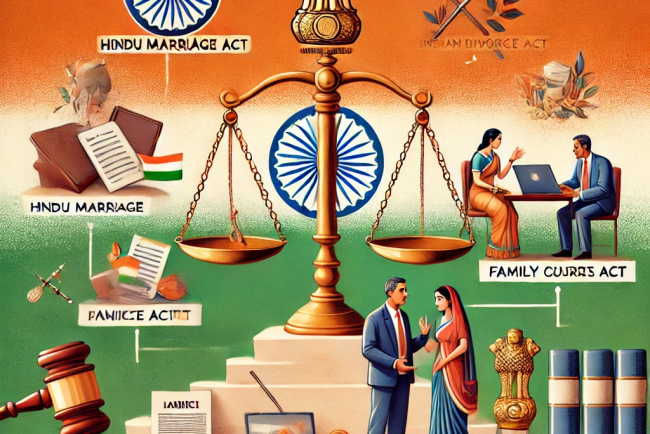
The divorce law in India is mainly determined by personal laws which are based on religion that include the Hindu Marriage Act, 1955; Muslim Personal Law; Indian Divorce Act, 1869; and Special Marriage Act of 1954. These laws govern the dissolution of marriage, maintenance, child custody, and alimony. The grounds on which one may file for divorce include mutual consent or contested grounds, such as cruelty, desertion, adultery, or mental disorder.
Types of Divorce Cases in India
1. Mutual Consent Divorce
Dissolution of marriage with the consent of both spouses.
The waiting period is six months, which can sometimes be waived by courts.
Major points of agreement are child custody, alimony, and division of assets.
2. Contested Divorce
Filed where one spouse does not consent to the divorce.
The grounds on which it may be filed include adultery, cruelty, desertion(continuous for more than 2 years), conversion to another religion, mental disorder, or having a communicable disease.
Contested divorces are time-consuming and fraught with legal complications.
3. Divorce under Muslim Law (Talaq and Khula)
These cases are governed under Muslim Personal Law.
Categories: Talaq-e-Sunnat (Revocable), Talaq-e-Biddat (Irrevocable), Mubarat (Mutual consent), Khula (Initiated by the wife).
4. Divorce under Christians and Parsi Laws
The dissolution is governed by the Indian Divorce Act of 1869 and the Parsi Marriage & Divorce Act of 1936 for Christians and Parsis.
Grounds: Adultery, cruelty, or desertion.
5. Annulment of Marriage
If the marriage is null and void due to bigamy, fraud, mental incapacity, etc., annulment is preferred over divorce.
Offenses and Punishments Under IPC in Divorce Cases
Certain offenses under Indian Penal Code (IPC) are linked with divorce proceedings:
Section 498A – Cruelty by Husband or Relatives (Punishment: Upto 3 Year imprisonment and Fine)
Section 304B – Dowry Death (Punishment: 7 Years to Life Imprisonment)
Section 494 – Bigamy (Punishment: Upto 7 Years Imprisonment)
Section 497 – Adultery (Decriminalized but very much used for civil divorce)
Section 125 CrPC – Maintenance for Wife, Children, and Parents
Essential Documents Required for Divorce in India
The following are the documents required for filing in a divorce:
- Marriage Certificate
- Proof of Identity (Aadhar Card, Passport, PAN Card, etc.)
- Address Proof
- Photos of the Couple
- Proof of Separation(if applicable)
- Income Tax Returns & Salary Slips
- Details of Assets and Property
- Child Custody Agreements (if applicable)
- Proof of Allegations(if contested divorce cases)
Case Studies: How We Helped Our Clients
Case Study 1: Fast-Tracked Resolution for Mutual Divorce
A couple from Raja Garden consulted us for mutual consent divorce. Following the legal procedure, they were able to complete the agreement process very smoothly, resulting in the filing of the divorce case two weeks from the date of the consultation and divorce within a time period of six months.
Case Study 2: Child Custody Obtained by The Father
A father in Delhi approached us for custody of his minor son. A lot of evidence was led showing that he was financially stable and had emotional attachment with the child. The court hence passed the order in favor of the father.
Case Study 3: Protection Against False Dowry Case
The client was falsely charged under Section 498A IPC. The evidence was collected and a strong defense was put in, which led to the dismissal of the case.
What Does The Law Say About Divorce?
Hindu Marriage Act 1955-the law governs grounds for divorce, maintenance, and custody.
Muslim Personal Law-these provide various forms of divorce and maintain the right to maintenance.
Special Marriage Act, 1954-governs inter-caste marriages and divorces.
Indian Divorce Act,1869-this concerns all Christian divorces in India.
Parsi Marriage & Divorce Act 1936-this concerns all divorces regarding Parsi communities.
Protection of Women from Domestic Violence Act, 2005-Provides protection for women against abuses.
Frequently Asked Questions (FAQ)
Q1. How long does it take to get a divorce in India?
Mutual consent divorce takes 6-9 months.
Contested divorce, depending on the complexity of the case, may take 3-5 years.
Q2. Can I file for divorce without my spouse's consent?
Yes, in a contested divorce, you may file based on legal grounds like cruelty, adultery, or desertion.
Q3. What is divorce lawyer fees in Raja Garden?
The fee depends on the complexity involved; that being said, we offer free consultation.
Q4. Will my presence be required in court for my divorce case?
For mutual consent, both spouses have to appear twice. In contested, on the basis of the case's progress, the appearance is required.
Q5. After divorce can a woman claim maintenance?
Yes, a woman can claim maintenance under Section 125 CrPC or some other personal law if she is incapable of maintaining herself.